

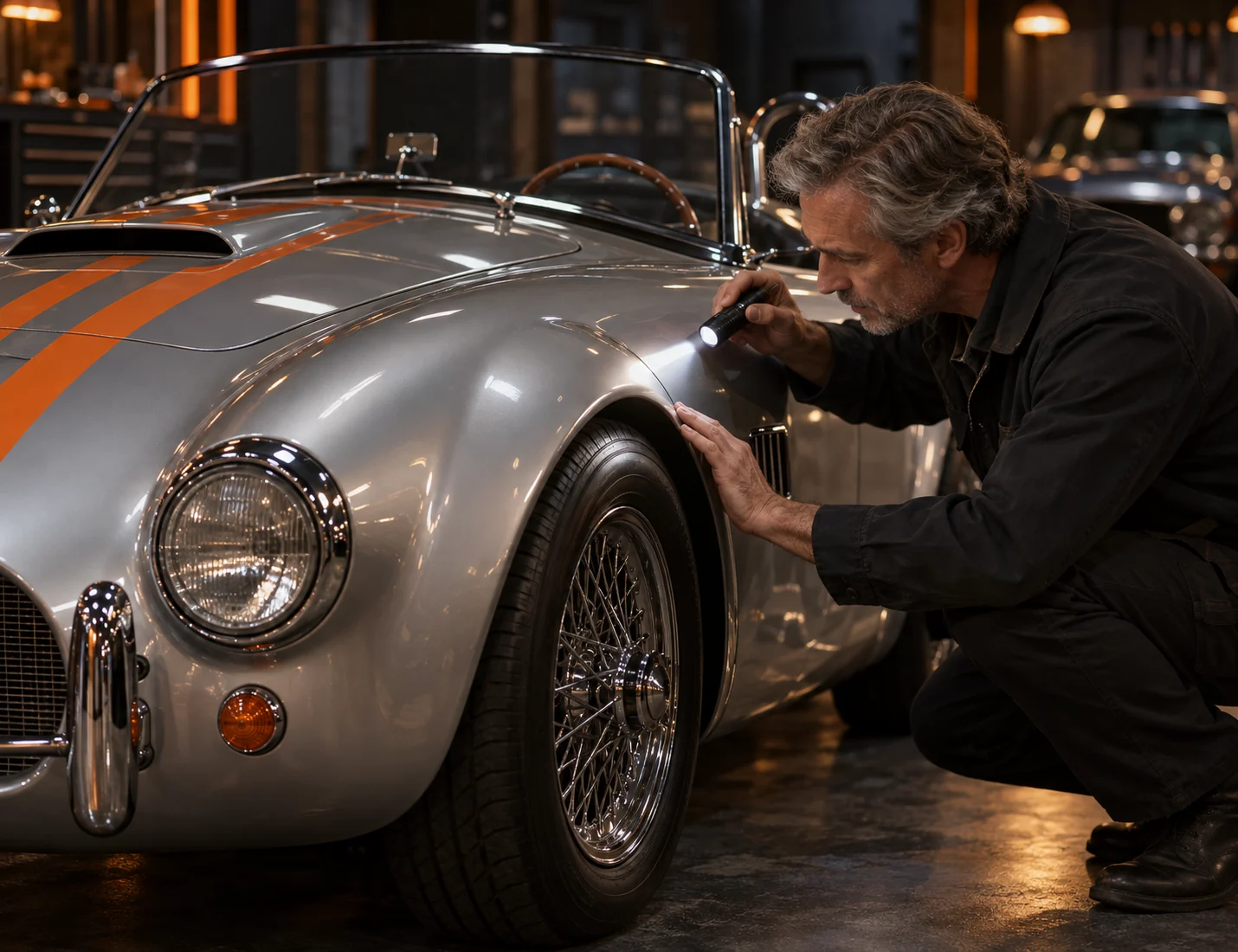
A classic car is priced by its history as much as by its shine. Before you fall for the colour, check the three things that decide what it is really worth.
Rust first
Look underneath, in the wheel arches, the sills and the boot floor. Fresh underseal can hide a lot, so bring a magnet and a torch, and ask for photos from any restoration.
Matching numbers
An engine and gearbox that left the factory with the car add a large part of its value. Compare the stamps with the build sheet or the chassis plate before you agree a price.
Paperwork
Receipts, old registrations and owner letters turn a story into a fact. A thick binder is worth paying for; a car with no history should cost a lot less.
Drive it warm
Many faults only show when everything is hot. Drive for at least half an hour and watch the gauges, the smoke and the oil pressure.
On “Buying a classic car: what to check first”.
Be kind and stay on topic. Comments may be reviewed before they appear.