Fixed prices, honestly explained.
How we quote, what the ±10% really covers, and the three times it went wrong — including the store that doubled in scope halfway through, what we charged for it, and the rule we wrote afterwards so it never surprises anyone again.
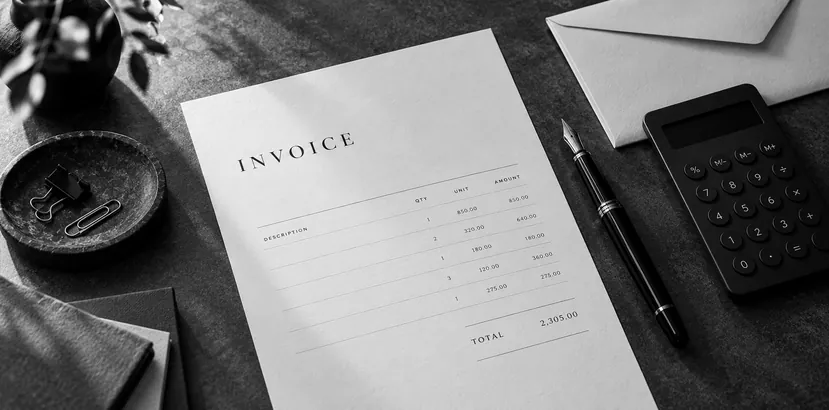
Every quote we send has one number on it. Not a range, not “from”, not an hourly rate with an estimate attached. One number, and a short list of what it buys. People are often surprised by that — agencies are supposed to be vague about money — so this note explains how we get to the number and what happens when the work changes.
01 — How we quote.
After the first call we write the scope as a list of deliverables, not hours: pages, templates, components, integrations. Each line has a price we have used on dozens of projects before. We add them up, round to something sensible, and that is the quote. It usually takes us a day.
“If it isn’t on the quote, you don’t pay for it. If it is, you never pay more than ten percent extra.”
02 — What the ±10% covers.
Small things move during a project. A page splits into two, a form needs one more step, the photos arrive later than planned. The ten percent absorbs that. Anything bigger becomes a new line, with its own price, that you approve before we start it.
- 1NUMBER ON EVERY QUOTE
- ±10%THE MOST IT CAN MOVE
- 24 hTO GET THE QUOTE
03 — Three times it went wrong.
Once, a store doubled in scope halfway through. We stopped, re-quoted the new half, and the client chose to launch the first half on time. Once, we under-priced motion work and ate the difference. Once, a client asked for a range “for the board” — we gave one, regretted it, and went back to a single number.
The rule we wrote after all three is short: new number first, your approval second, work third.

WRITTEN BY
Ana Reyes · Founder, design director
Runs the studio, writes every quote, and still reviews every Thursday. Fourteen years of fixed prices and counting.